
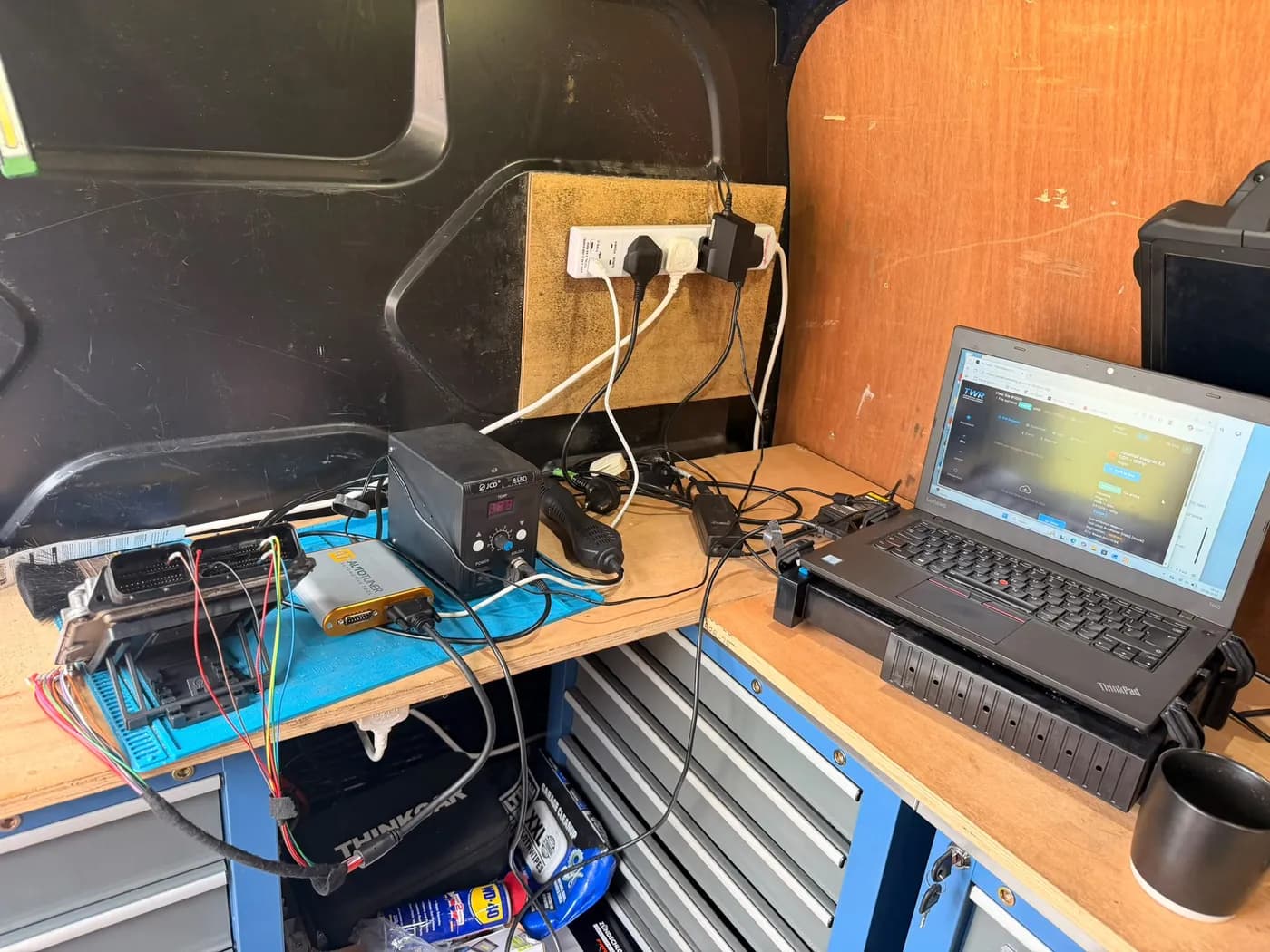
No. A diesel particulate filter is emissions equipment the vehicle was approved with, and removing it, hollowing it out or switching it off in the software means the vehicle no longer meets the standard it was built to. Using it on the road is then an offence under the Construction and Use Regulations, with a fine of up to £1,000 for a car and £2,500 for a van. The MOT has checked for a missing DPF since February 2014 and, since the 2018 changes, fails a DPF-fitted diesel that smokes or shows signs of tampering. We are asked for deletes every week and the answer is the same every time: not on a vehicle used on the road. What we do instead is set out below, and it is usually the cheaper route anyway.
What the law says, in plain words
Every new diesel sold in the UK since about 2009 was approved with a DPF as part of its emissions system. The Road Vehicles (Construction and Use) Regulations make it an offence to use a vehicle on the road once it has been modified so that it no longer complies with the emissions standard it was approved to, and when the MOT check was added in 2014 the government put the fine at up to £1,000 for a car or £2,500 for a light goods vehicle. That applies whether the filter was cut out, gutted so the canister looks intact, or left in place with the software told to ignore it. All three mean the vehicle no longer does what it was approved to do.
The same rule covers the rest of the emissions kit: the EGR valve, the AdBlue system on newer diesels, the catalyst. A blanking plate or an emulator is the same offence in a different place.
What the MOT checks
- Is the DPF there? Since February 2014 the tester checks that a DPF is present where one was fitted as standard. Missing is a fail.
- Has it been tampered with? Since May 2018, emissions control equipment that is missing, obviously modified or obviously defective is a major defect. A canister with fresh welds, or pipework that has clearly been cut and rejoined, is exactly what a tester is told to look for.
- Does it smoke? Also since 2018, a diesel fitted with a DPF that gives off visible smoke of any colour during the test fails. A diesel with the filter gutted smokes under load, which is where the "they cannot see inside it" argument falls over on the ramp.
- Is the engine light on? An engine management light that stays on is a major defect in its own right, and a delete that has not been done well leaves one.
Testers do not strip the exhaust, so a well-hidden delete can pass a test. That does not make it legal. It makes it an offence that has not been noticed yet, sitting in the car for the next tester, the next owner or a roadside check to find.
The other costs nobody mentions in the forum post
- Insurance. A delete is an undeclared modification, and an illegal one. An insurer who finds it during a claim has every reason to walk away.
- Selling the car. You cannot honestly sell a car as roadworthy with the DPF removed, and a buyer who has it checked, or whose first MOT fails on it, comes back to you.
- The fault that caused it is still there. Most DPFs that get deleted were blocking because of something else: short trips, a failed sensor, a stuck EGR, an injector or a turbo seal putting oil into the exhaust. Deleting the filter hides the symptom and leaves the cause.
- Putting it back. A replacement filter from the manufacturer runs to four figures on many cars. A deleted car that has to be made legal again for a sale or a test is a far bigger bill than the clean would have been.
Why people ask for it anyway
Because the first quote for a blocked DPF is often frightening: a new filter, fitted, at a main dealer price. Put that next to a delete offered for a few hundred pounds and the delete looks like common sense. The missing piece is that a blocked filter rarely needs replacing. It needs diagnosing, then regenerating or cleaning, and the thing that blocked it needs fixing so it does not come back. That is a fraction of the dealer price, and the car stays legal.
What we do instead
We diagnose first: fault codes, the soot and ash readings the car reports, the pressure difference across the filter and the live data from the sensors around it. That tells us whether the filter is full, whether it is the sensor saying it is full, or whether something upstream is the real problem. Then the fix is one of three. A forced regeneration where the filter is loaded but healthy. A proper clean on the car where soot has built up past the point regeneration can clear, from £180, described on our mobile DPF cleaning page. Or a repair of the part that caused it, whether that is a sensor, an EGR or something else. A filter that has genuinely failed, cracked or melted, does happen, and when it does we say so; in our experience it is the least common outcome. The full range is on our DPF and EGR solutions page, and if the light is on right now, our guide to the DPF light covers what to do today.
A delete does not fix a DPF problem. It removes the evidence, leaves the cause, and hands the problem to the next MOT tester, the next owner, or you.
If a previous owner already deleted it
This comes up with used diesels more than people expect. The car drives fine, there is no light, and the first anyone knows is a failed MOT or a tester who spots the welds. If you suspect it, we can read the ECU and tell you what software it is running, which is the same check as in our guide on how to tell if a car has been remapped. Making it right means the original software back in, from the manufacturer's file, and a filter in the exhaust. Better to know that before you negotiate than after.
If you are being told a delete is the only answer for your car or van, send us the reg and what the light is doing. We will tell you what it is likely to be and what the legal fix costs before we come out, anywhere in Chester, Cheshire and North Wales.