
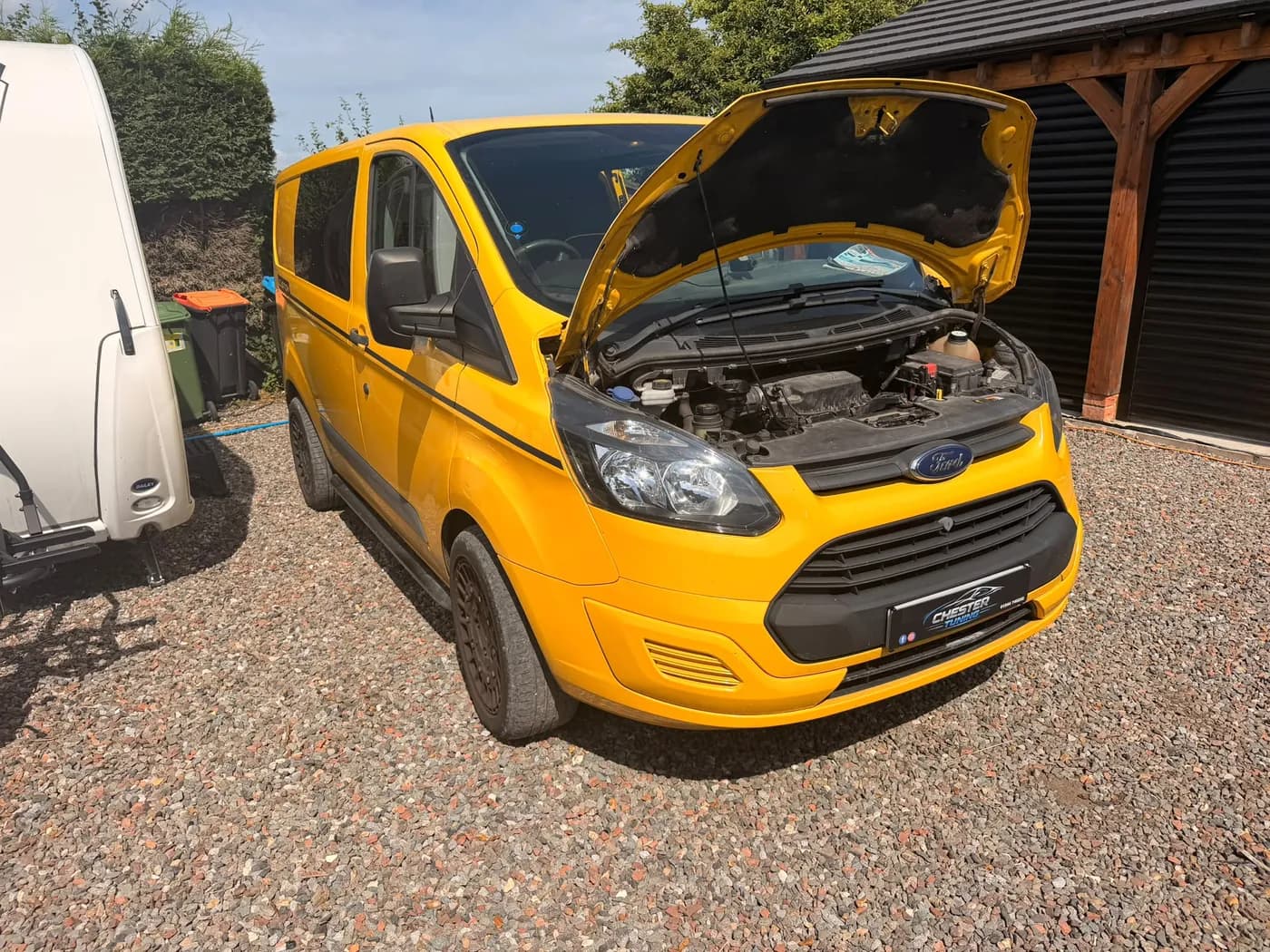
Yes, on most vans. A van with a gross weight of 3.5 tonnes or under is not required by law to have a speed limiter, so a limit that a fleet or a dealer set can be removed or raised, and the van is as legal afterwards as it was before. The vehicles that must keep a working limiter are goods vehicles over 3.5 tonnes and buses, coaches and minibuses with more than eight passenger seats, and we do not touch those. What the job involves depends on where the limit lives: in the engine software, in a body or instrument module, or in a box someone wired in. We read the van first and tell you which it is before you decide anything.
Where the law draws the line
The speed limiter rules sit in the Road Vehicles (Construction and Use) Regulations. They require a limiter on goods vehicles with a maximum laden weight over 3.5 tonnes, set so the vehicle cannot exceed 90 km/h, which is 56 mph, and on passenger vehicles with more than eight passenger seats, set at 100 km/h, 62 mph. Those vehicles carry a limiter plate in the cab, the work on them is done at authorised speed limiter centres, and the limiter is checked at the annual test. If you drive a lorry or a coach, that is your world and nothing in this guide applies to you.
A Transit, Sprinter, Crafter, Vivaro or Transporter at 3.5 tonnes or under is in none of those categories. No law says it must have a limiter, so no law is broken by taking one out. What you must still keep to are the speed limits for a van, which are lower than a car's on most roads: 50 mph on a single carriageway, 60 on a dual carriageway and 70 on a motorway, unless it is a car-derived van. Removing a limiter does not change those, and a van limited to 70 was never stopping you from doing anything illegal in the first place.
Why so many vans arrive limited
Nearly every limited van we see was a fleet vehicle first. Utility companies, delivery firms, councils and the big hire fleets set limits of 56, 62 or 70 mph to cut fuel, cut accidents and keep their insurance down, and when the van is sold at auction three or four years later the limit goes with it. The new owner finds out on the first motorway slip road. Ex-British Gas and ex-Openreach vans are the ones people ask about most, along with ex-rental Transits and Sprinters, and the usual figure is 62 or 70.
The second group is vans bought new with a limiter as a factory option, often because a finance or insurance deal asked for it. The third is the home-made kind: a box wired into the throttle or the data network by a previous owner or a small fleet, sometimes with the wiring left in a state that causes faults of its own.
The three kinds of limiter, and what removing each one means
- Set in the engine software. The most common type on Ford, Vauxhall, Renault and Mercedes vans. The limit is a value in the engine ECU or a related module. We read the van, change the value or lift the limit in the calibration, write it back and road test. No parts, nothing visible, done at your address in an hour or two.
- Set in a body or instrument module. Some vans hold the limit in the body control module or the instrument cluster rather than the engine ECU, and some need the manufacturer's own configuration tool to change it. Same result, different door in.
- An aftermarket box. A separate unit spliced into the pedal or the data wiring. Removing it means taking it out and putting the original wiring back properly, not unplugging it and leaving the splice, because a half-removed box is a fault waiting to happen.
Which type you have is not always obvious from the driver's seat, which is why we read the van before quoting rather than guessing from the badge. A limit set at an odd figure such as 68 mph is nearly always a fleet setting. One at exactly 56 or 62 sometimes means the van was specified to match a fleet rule for its heavier siblings, and we check what the van is before anything is touched.
Raise it or remove it?
Both are possible on most vans. Owner-drivers usually want it gone. Small fleets often want it moved, say from 62 to 70, so their drivers can keep up with motorway traffic without the van being flat out. A limit that matches the legal motorway speed for a van is a reasonable thing to keep, and we will do either and tell you honestly if the van's gearing or age makes one choice better than the other.
What to check before you book
- Whose van is it? If it is leased or on a hire agreement, it is not yours to change. Ask the leasing company in writing first. Some say yes, some say no, and the ones that say no mean it when the van goes back.
- Insurance. Removing a limiter is a modification. It is usually a quick note on the policy, but it is a note that has to be made, for the same reasons as in our guide on remaps and insurance.
- Warranty. On a newer van a dealer can see that the configuration has changed. If the van is still under the manufacturer's warranty, know where you stand before the work, not after.
- Intelligent Speed Assistance. New vehicles sold in the EU have had ISA since July 2024, and most new vans sold in Britain are built to the same specification. ISA reads the speed limit signs and warns you or eases the throttle. It is not a fixed limiter, the driver can switch it off for each journey, and it is not something we remove.
- The van's health. Taking the limiter off a tired van does not make it a quicker van; it makes it a tired van doing 70. If it is down on power or drinking fuel, that is a job for diagnostics first.
How we do it
We come to the van, at home or at your yard. We read the vehicle and find where the limit lives, tell you the price for your van before starting, make the change, clear any stored faults and road test it so you see the result rather than take our word for it. Most jobs are done in under two hours. The details and the starting price are on our speed limiter removal page, and if the van is an ex-fleet diesel doing big miles, read about van remapping at the same time, because the two jobs are often done in one visit.
A van held to 62 on the M56 is not safer, it is in the way. Removing a fleet limiter from a 3.5 tonne van is legal; the only question is which module it lives in.
If you have bought an ex-fleet van and found the limiter the hard way, send us the reg and the speed it is held to. We will tell you which type it is likely to be and what it will cost to change.