
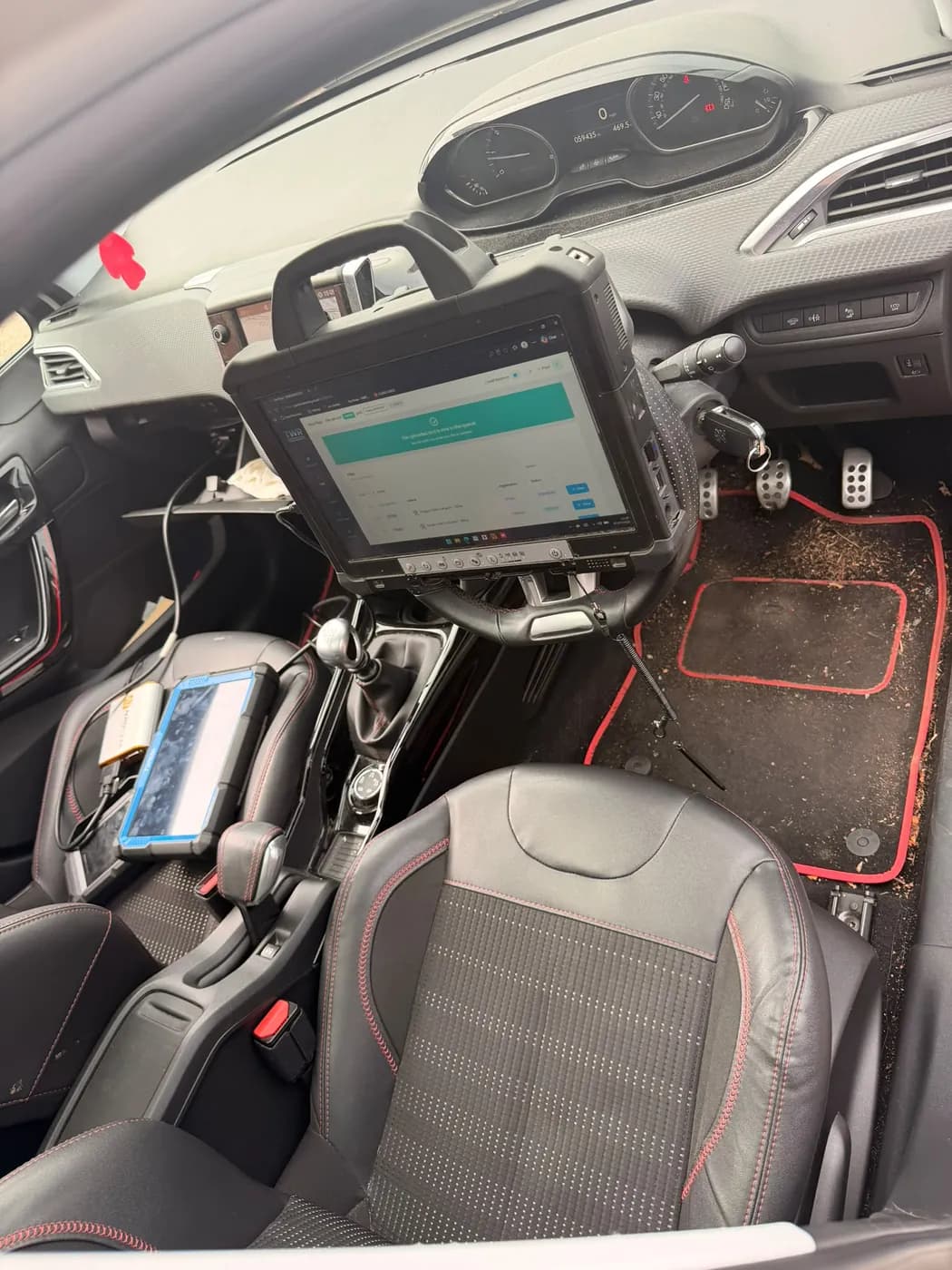
The short answer: the price of a remap is set mostly by three things. Whether the map is written for your car or pulled off a shelf for your engine code, whether the ECU can be read through the OBD port or has to come out of the car, and whether you are buying a remap at all or a fault that someone has decided to map around. Everything else, including who is mobile and who has a unit, moves the number far less than people expect.
We get asked about price before anything else, which is fair enough. What follows is what sits behind the number, so that when you compare two quotes you are comparing the same thing.
A generic file and a written map are not the same job
Tuning files can be bought. Type in an engine code, download something that has been used on a few thousand cars, write it in, drive away. It takes minutes and it is where the cheap end of the market lives.
A map written for your car starts from your car's original file, which is read out first, and is adjusted around what that specific vehicle is doing. Mileage, condition, whether the turbo is healthy, what the injectors are being asked for already, and how you actually drive it. On a tired 150,000 mile diesel that matters enormously, because the file that suits a clean example will ask for more than a worn one can comfortably give.
Both are sold as "a remap". One is a product and the other is work. That single difference explains most of the gap between the cheapest quote and a sensible one.
Some ECUs are far harder to get into than others
This is the cost driver nobody mentions and almost nobody knows about. On a lot of cars the ECU can be read and written through the OBD port under the dashboard. Plug in, read, write, done, and the car never gets taken apart.
On plenty of others, particularly newer VAG, BMW and Mercedes units, that door is shut. The ECU has to come out of the car and be opened and connected directly on the bench. That is a different job with a different amount of risk attached, and it takes a good part of a day rather than an hour.
So two people can quote honestly for the same service and be a long way apart purely because of what is under one bonnet and not the other. If a quote seems high, ask whether the ECU has to come out. If it seems low for a car you know is awkward, ask the same question.
You might not be buying a remap at all
A steady share of the calls we get are people asking for a map when what they have is a fault. The car feels flat, or it is drinking fuel, or there is a light on, and a remap sounds like the fix.
Sometimes it is. Often it is a leaking boost pipe, a sticking turbo actuator, a clogged filter or an EGR that has stopped doing what it is told. Mapping a car in that state can make it feel better for a fortnight, because more fuel and more boost will paper over almost anything for a while. Then it comes back worse, and now there is a map in the way of diagnosing it.
That is why we would rather look at a car that is not right before quoting for tuning it. Proper diagnostics costs less than mapping around a problem and then having to unpick both.
What the cheap end is usually leaving out
Not always, and there are good people working cheap. But when a remap is priced well under everyone else, one of these is normally missing.
- Your original file, saved and kept. Without it, the car can never be put back to exactly how it left the factory.
- Anything written down. No record of what was changed means the next person to touch the car is guessing.
- A conversation about what your car will actually gain, as opposed to what the advert says the engine gains.
- Support afterwards. The map is the easy part. Being available when something is not right three months later is the part that costs money to provide.
- A power figure that came from your car rather than from a brochure.
The first one is the one to care about. If nobody saved your original file, going back to stock stops being a five minute job and becomes a problem. Before you book anything with anyone, ask: do you save my original file, and will you give me a copy. The answer tells you a lot about the rest of it.
Mobile or a unit makes less difference than you would think
We are mobile, so we come to the car. Plenty of good tuners work from a unit. On price, the two are closer than people assume, because the overheads swap round rather than disappear: a unit costs rent, a mobile setup costs the driving.
Where it does matter is what a job needs. Bench work on a removed ECU is better done somewhere still and clean. A straightforward OBD map is genuinely fine on a driveway, and it saves you a morning off work. If a car needs the second and someone offers the first regardless, that is worth asking about.
Comparing two quotes properly
Ask all three of the same questions and the difference usually explains itself.
- Is the file written from my car's original, or is it a stock file for my engine code?
- Does my ECU need to come out, and if so is that included?
- Do you save my original file, and can I have a copy of it?
If one quote is half the other and the answers are the same, take the cheaper one. In our experience the answers are rarely the same, and that is the whole story.
Where our prices sit
We publish a starting price on each service page rather than making you ring to find out, and we will give you a firm figure for your car and registration before anything is booked. If your car is one where the ECU has to come out, we tell you that in the same conversation rather than on the day.
If we think a remap is not worth your money, we say so. That happens more often than you would expect, usually on small naturally aspirated petrols where the honest gain does not justify the spend. Tell us what you drive through the quote form and you will get a straight answer either way.